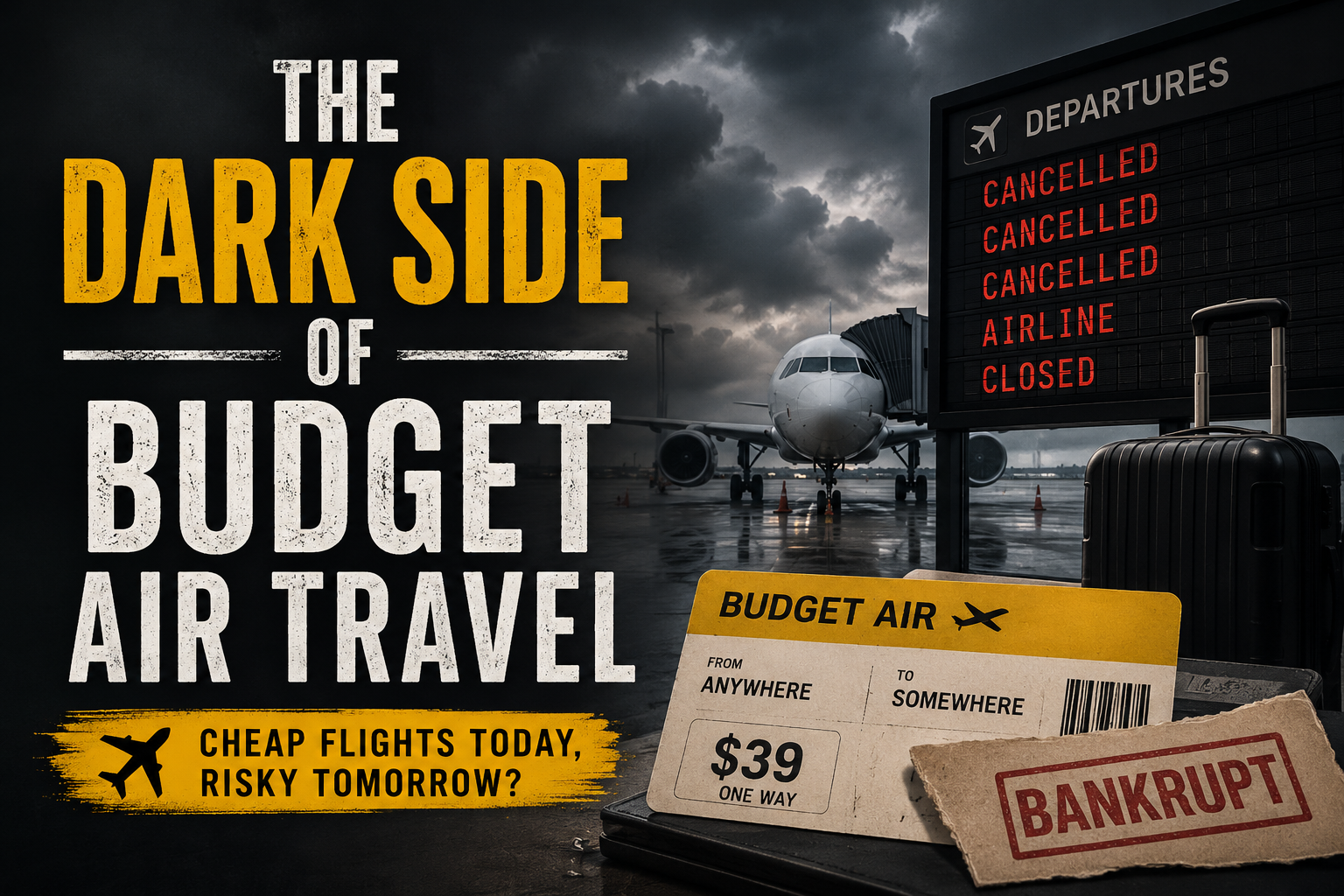
Low-cost carriers have changed the way people travel. Airlines like Spirit Airlines, Ryanair, and easyJet made it possible for ordinary travelers to fly for prices that once seemed impossible. Weekend trips, spontaneous vacations, and cross-country travel suddenly became affordable to millions of people.
But there is another side to ultra-cheap airfare that travelers sometimes overlook: low-cost carriers can be fragile businesses. Thin profit margins, rising fuel prices, economic downturns, aircraft shortages, and fierce competition have pushed many discount airlines into bankruptcy or complete collapse over the years. When that happens, passengers can suddenly find themselves stranded, scrambling for refunds, or forced to pay last-minute replacement fares that cost several times more than the original ticket.
The Graveyard of Budget Airlines
The history of aviation is filled with low-cost airlines that disappeared almost as quickly as they arrived.
One of the most famous examples in the United States was Skybus Airlines. Based in Columbus, Ohio, Skybus launched in 2007 with an aggressive model inspired by European budget carriers. The airline advertised extremely cheap fares and hoped to revolutionize American air travel. Less than a year later, Skybus shut down completely after rising fuel prices and economic problems crushed the company.
In Europe, Air Berlin became one of the biggest airline collapses of the modern era. Once Germany’s second-largest airline, Air Berlin mixed low-cost pricing with traditional airline service. Financial losses piled up for years before the airline finally ceased operations in 2017 after its primary investor stopped supporting the company.
Another cautionary tale was WOW air. The Icelandic carrier became famous for ultra-cheap flights between North America and Europe, often with stopovers in Iceland. Travelers loved the prices, but the airline expanded too quickly and eventually collapsed in 2019, leaving many passengers stranded overseas.
And now even Spirit Airlines — long known as one of America’s most recognizable ultra-low-cost carriers — has faced severe financial turmoil and ultimately shut down operations in 2026 after multiple bankruptcy attempts and rising operating costs.
These failures are reminders that when an airline sells tickets for unbelievably low prices, the business itself may be operating with very little room for error.
Why Low-Cost Carriers Are More Vulnerable
Traditional airlines often have multiple revenue streams: premium cabins, business travelers, cargo operations, loyalty partnerships, and international alliances. Low-cost carriers usually rely heavily on volume and ancillary fees.
That means a sudden spike in fuel prices, a drop in travel demand, or maintenance issues can become catastrophic very quickly. Some low-cost carriers also lease large portions of their fleets, meaning they face enormous monthly obligations even during downturns.
The business model can work extremely well during stable economic times. But aviation is one of the most volatile industries in the world. A few bad quarters can push a budget airline into survival mode.
The Risks Travelers Face
When a low-cost carrier collapses, passengers can experience several problems almost immediately:
- Future flights may be canceled without much notice.
- Refunds can take weeks or months.
- Customers who paid with debit cards may have less protection.
- Replacement airfare may be dramatically more expensive.
- Hotels, tours, and rental cars tied to the trip may become unusable.
- Travelers overseas may suddenly be stranded.
Many travelers learned this the hard way during the collapses of airlines like Air Berlin, WOW air, Monarch Airlines, and Thomas Cook Airlines.
The cheaper the ticket, the more important it becomes to think about what happens if something goes wrong.
How to Protect Yourself
Thankfully, there are several ways travelers can reduce the risk.
1. Use a Credit Card Instead of a Debit Card
This is one of the biggest protections available.
Credit cards often allow chargebacks if a service is not delivered. If an airline suddenly stops operating, you may have a better chance of recovering your money quickly through your card issuer.
Debit cards usually provide weaker consumer protections and can tie up your actual bank balance during disputes.
2. Buy Travel Insurance Carefully
Not all travel insurance policies cover airline bankruptcy or financial default, so it is important to read the fine print.
Look specifically for:
- “Supplier default” coverage
- “Financial insolvency” protection
- Trip interruption coverage
Some premium travel credit cards include these protections automatically.
3. Avoid Booking Too Far in Advance
Budget airlines can look stable right up until the moment they are not.
Booking six to ten months ahead on a financially struggling airline carries more risk than booking closer to departure.
4. Be Careful With Separate Tickets
Many travelers build ultra-cheap trips by mixing airlines independently.
For example:
- Airline A gets you to New York.
- Airline B takes you to Europe.
If Airline A collapses or delays you, Airline B usually has no obligation to help. One canceled low-cost flight can destroy an entire itinerary.
5. Keep Emergency Funds Available
If a budget airline fails while you are traveling, you may suddenly need to purchase a very expensive last-minute ticket home.
Having emergency funds or available credit can make a major difference in a stressful situation.
6. Watch for Warning Signs
Travelers should pay attention to:
- Bankruptcy headlines
- Mass route cuts
- Aircraft groundings
- Failed merger attempts
- Delayed payroll rumors
- Sudden reductions in schedules
Airlines rarely collapse entirely out of nowhere.
Cheap Flights Still Have Value
Despite the risks, low-cost carriers have undeniably transformed travel for the better in many ways. Millions of people have been able to visit family, take vacations, or explore new places because budget airlines made flying affordable.
But ultra-cheap airfare comes with a tradeoff: less stability.
For travelers, the goal is not necessarily to avoid low-cost carriers entirely. It is to understand the risks, prepare for worst-case scenarios, and avoid assuming that a $39 ticket comes with the same level of protection and reliability as a major legacy airline.
Sometimes the cheapest ticket ends up being the most expensive one in the end.