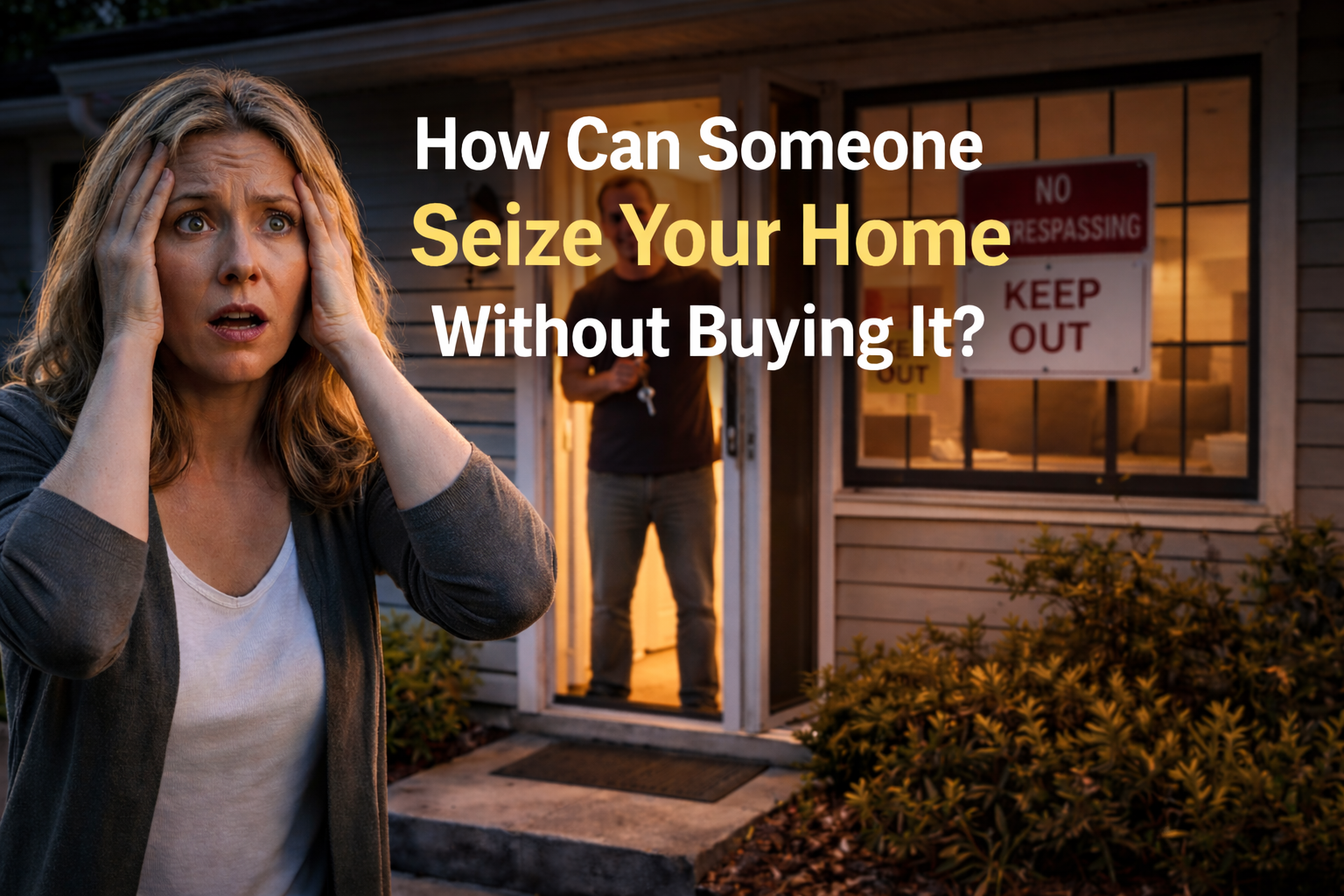
A Stranger Took Her Home — And Now She’s Facing Foreclosure
How Does This Even Happen in America?
She owns the house.
She pays the mortgage.
But for more than a year, another man has allegedly been living inside it — rent-free.
Now the bank is threatening foreclosure.
How does a homeowner lose control of their property while still being financially responsible for it?
This isn’t fiction. It’s a growing pattern playing out in cities across the country — and in this case, in Florida.
Let’s break down what may actually be happening.
The Nightmare Scenario
According to reports, a Florida mother says a man somehow “seized” her home and has lived there for over a year without paying rent. She claims she’s been unable to remove him quickly, and meanwhile, the mortgage payments have continued.
Or worse — stopped.
Because here’s the part people don’t talk about:
The bank doesn’t care who is living inside the house.
They care whether the mortgage is paid.
If payments stop — foreclosure begins.
And foreclosure timelines move faster than civil eviction disputes in many cases.
That’s how someone can lose a home they technically still own.
Why Police Often Call It a “Civil Matter”
One of the most frustrating parts of these cases is when homeowners call law enforcement and are told:
“This is a civil issue.”
Why?
Because if the person inside the property presents any form of documentation — a lease (real or forged), a rental agreement, proof of mail delivery, utility bills — officers often hesitate to treat it as criminal trespassing.
At that point, it shifts into landlord-tenant law.
And landlord-tenant law moves slowly.
Especially if courts are backed up.
Especially if the occupant claims legal tenancy.
Legal Breakdown: What’s Really Going On?
These stories get emotionally charged quickly, but it’s important to separate three very different legal concepts people often confuse.
1️⃣ Squatting
Squatting typically means someone occupies property without permission.
However:
In many states, once someone establishes “possession” and claims tenancy, it’s no longer simple trespassing.
If they’ve received mail there.
If they changed locks.
If they show a lease (even a questionable one).
It may require formal eviction through court.
In Florida specifically, new laws in 2024 were designed to speed up removal of squatters. But even then, disputes over documentation can delay enforcement.
The system is designed to prevent illegal lockouts and wrongful evictions — but that protection can sometimes be weaponized.
—
2️⃣ Adverse Possession (Often Misunderstood)
Many headlines scream “adverse possession.”
But true adverse possession is far more complex.
In Florida, adverse possession requires:
Continuous occupation (typically 7 years)
Open and notorious use of the property
Payment of property taxes (in many cases)
A claim of right
A year-long occupation does not equal adverse possession.
Most viral squatter stories are not adverse possession cases.
They’re something else.
—
3️⃣ Deed Fraud (The Real Danger)
Here’s where things get darker.
In some cases nationwide, individuals:
Forge property deeds
File fraudulent documents with the county
Create fake rental agreements
Present paperwork claiming ownership
If someone records a fraudulent deed, it can create a cloud on title — making removal significantly more complicated.
This is not theoretical. Deed fraud has surged in multiple states.
And once paperwork exists in official records, things slow down dramatically.
The Mortgage Problem No One Talks About
Let’s assume the homeowner:
Can’t access the property
Stops paying the mortgage out of frustration
Or simply can’t afford both legal fees and mortgage payments
Foreclosure is a separate process.
The bank is not involved in the occupancy dispute.
They’re enforcing a contract.
Miss payments → Notice of default → Foreclosure timeline begins.
That’s how someone can technically “own” a house — and still lose it.
Not because someone stole it legally.
But because legal gridlock bought the occupant time.
Why This Feels So Wrong
Americans operate under a basic assumption:
L
> If I own something, I control it.
But property rights in the U.S. are layered:
Mortgage contract law
Landlord-tenant law
Civil eviction procedures
Fraud investigation timelines
County recording systems
When these collide, the system slows.
And when the system slows, whoever is physically inside the property often has leverage.
Possession matters.
Could This Happen to You?
It’s rare — but not impossible.
Situations that increase risk:
Vacant investment properties
Homes left empty during renovations
Out-of-state owners
Inherited properties
Landlords between tenants
Vacancy creates opportunity.
Paperwork confusion creates delay.
Delay creates financial damage.
The Bigger Question
Is this a failure of the legal system?
Or the unintended consequence of protections designed to prevent wrongful eviction?
Tenant protections exist for good reason.
But when fraudulent documentation or bad actors exploit those protections, homeowners can find themselves trapped between:
A slow civil court process
A fast foreclosure clock
And time is expensive.
The most disturbing part of stories like this isn’t that someone allegedly lived rent-free for a year.
It’s that the owner may lose the property entirely — not because ownership changed, but because time ran out.
The mortgage never pauses.
The legal system often does.
And in that gap, real people get crushed.
—